Showing posts with label #Rwanda. Show all posts

Saturday, April 23, 2016

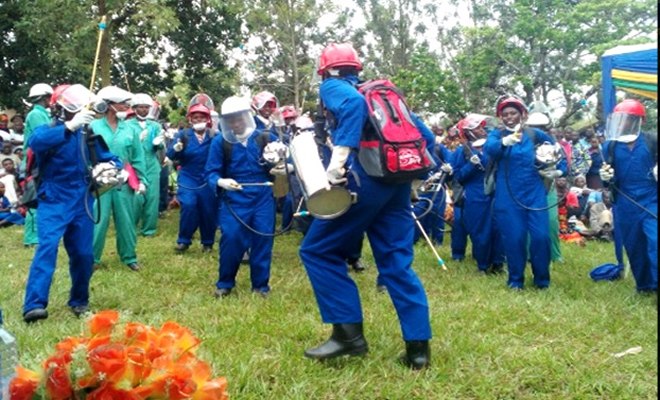
Rwanda Army Joins Battle Against Malaria


Rwanda Army Joins Battle Against Malaria

Thursday, March 31, 2016

Medics tipped on professionalism

PUBLISHED: March 28, 2016 in The New Times - Rwanda  By: STEVEN MUVUNYI

http://www.newtimes.co.rw/section/article/2016-03-28/198425/


Minister Binagwaho (C)speaks as Prof. Rwamasirabo (L) outgoing chairman, and Dr
Rudakemwa, the new chairman look on during the meeting in Kigali. (Steven Muvunyi)

Medics have been urged to improve their profession by prioritising the common good
of the medical practice.
The call was made by the Minister for Health, Dr Agnes Binagwaho during the
election of the National Council of the Rwanda Medical and Dental Association.
Minister Binagwaho told the medics to positively brand their profession, despite the shortage of doctors and teachers’ in the country.
“We need to consider how we want the population to perceive us. We have to prove
that we are the right people at the right place, with the right knowledge, right ethics
and the right morale,” she said.
Binagwaho asked medics to be humble in order to deliver correctly.
“The improvement of our profession is a continuous process. Gone are the days a
doctor did and knew everything. A good doctor has to learn every day since science is
an evolution,” she added.
The elected national board that will serve a four-year term is composed of Dr
Emmanuel Rudakemwa, the chairman, Dr Jean Claude Byiringiro, the vice
chairperson, Dr Albert Nzayisenga, the secretary as well as Dr Kaitesi Mukara Batamuriza, the treasurer.
The national board also includes representatives of the public medical and dental schools, dental and private practitioners among others.
The voters were twenty nine provincial representatives. Prof. Emille Rwamasirabo,
the outgoing chairman of the council was pleased by the progress made during his
tenure and advised the new committee to work hard to impact Rwanda’s medical
future.
“Many professional malpractices were solved, but we still need to work on the improvement of uncaring doctors and increase the training,” he said.
Dr Rudakemwa, a radiologist, newly elected chairman of the council said the new committee will work hard for quality improvement in medical practices.
“With the partnership and cooperation with the Ministry of Health and the
outgoing committee, we hope to take this institution to greater heights,” he said.
Established in 2003, Rwanda Medical and Dental Council is responsible for the regulation of medical and dental practice in Rwanda.
It is in charge of registering and licensing all medical and dental practitioners. 
For inquires on this article, please contact editorial@newtimes.co.rw

Experts discuss health financing

Published in The New Times -Rwanda on March 31, 2016 by HUDSON KUTEESA


Minister Binagwaho (R) explains the need to finance the health sector as Minister Gatete (C)
and Jesse Joseph of USAID look on during the meeting in Bugesera. (Doreen Umutesi)
Local and international experts on health financing are meeting in Nyamata, Bugesera District to discuss the desired health financing modifications and how they can be aligned with the Sustainable Development Goals.
The two-day conference that opened yesterday is held under the theme: “Health financing reforms in the eve of sustainable development goals.”
The conference attracted over 150 participants, including experts from Senegal, Sierra Leone and Ethiopia, deliberating on how current health financing policies can be a stepping-stone toward achieving the SDGs.
The national and international experts, especially those who have contributed in the design and implementation of health financing reforms in Rwanda are sharing current state of health financing policies and brainstorming about the future directions.
Minister Gatete explains the challenges of priotising finance in the health sector.
Dr Agnes Binagwaho, the Minister for Health in an interview with journalists said the conference would come up with ideas on how to generate finances for the health sector and look at ways of using it efficiently.
“Rwanda has achieved the SDGs, but to us, it is not enough. We want more achievements and it needs money.
So these health financing experts are gathering to come up with innovations of financing the health sector and how we can use the finances efficiently.We need innovation for example electronic medical records which use ICT linked with diagnostics. Such innovations reduce the money spent or bring efficient spending. We hope to come up with solutions for the future in the global architecture of health.”
Claver Gatete, the Minister for Finance and Economic Planning emphasised the importance of financing the health sector which he described as the foundation of all development in Rwanda.
“The health sector is an area that we can’t avoid because it will come back and haunt us. It is the foundation of all development in Rwanda.The topic of health financing is very timely. It comes at a time when we are looking at what we have achieved in vision 2020. So, it will help us to see ways of financing the health sector and how we can work with the other financing institutions to contribute to the sector,” he said.
“Investing in health sector is very important.For instance if we invest in health equipment, there will be no more going to India for surgeries and other complex medical processes.And this can save a lot of money and even bring in forex when neighbouring countries send their patients for treatment here.”
He also called for innovation that will see Rwanda be able to finance such institutions without depending on support from outside countries, citing an example from last year’s budget where 66 per cent was from domestic resources, 14 percent borrowed and 20 per cent from grants.
“We should think differently. We cannot expect that money will always be coming from outside all the time.We have to think innovatively towards health financing by working with partners, tapping into the private sector institutions and most importantly engaging the population.”
He expressed hope that by working together, the health system can change for the better and thanked the financing partners working with the ministry of health including Global Fund, the US government, Bill Gates Foundation, Rocke Fella Foundationand bilateral donors like the Belgians among others.
The Rwanda Vision 2020 considers health financial accessibility as a key priority among its strategic direction
Among the anticipated outcomes of the meeting are understanding the current status of global health financing reforms in the areas of universal health coverage and quality assurance approaches; reviewing of different approaches to ensure sustainable quality improvement and exploration of ways to link financial reforms with quality assurance and improved initiatives.
The discussions from the meeting will feed into the current government process of developing a health sustainability plan for the whole health sector.
editorial@newtimes.co.rw

Undergrad Interns for Rwandan Health Minister


University of Vermont  University Communications


03-29-2016


Sarriera and Binagwaho
Just before this photo was taken in March 2015, Gabriela Sarriera ’17 dared to ask Rwanda’s minister of health for a job or internship or some way to contribute to the global health leader’s work. One year later, she’s living in Kigali, helping Dr. Agnes Binagwaho research policy that affects equal access to healthcare. (Photos courtesy of Sarriera)


As one of six kids, Gabriela Sarriera '17 is practiced in the art of speaking up and asking for what she wants. So when the microbiology major heard the Rwandan minister of health deliver a moving talk at the Global Health and Innovation Conference at Yale last year, she waited patiently in the long line after the keynote — not to ask for a photo as others had done — but to ask for a job.
“I want to know how can I help,” she remembers telling Dr. Agnes Binagwaho, a pediatrician who returned to her home country after the genocide and has helped recover a ravaged health system. Sarriera, who attended the conference as a member of UVM’s global health club, MedVida, also has plans to pursue medical school and become a pediatrician. But beyond just a career role model for Sarriera, Binagwaho is an inspiration.
The minister is the 2015 winner of the Roux Prize for her work to rebuild trust in the Rwandan health system and her contribution to initiatives that have increased the country’s life expectancy by 20 years, drastically dropped the maternal mortality rate, and, now that people are living longer, is expanding care for non-communicable diseases, as well. The Atlantic has called it a historic recovery — one the U.S. could learn from.
Sarriera promised the minister that if she accepted her help, she would find a way to get to Rwanda. FaceTiming from Kigali nearly 12 months after the Yale conference, Sarriera makes clear the gratitude she has for Binagwaho, who, amazingly, took a chance on the undergrad by offering her an internship, exposing her to work normally reserved for graduate students.

Healthcare for all

For three months now, Sarriera’s been immersed in learning the history of the Rwandan legal system. Why law when it’s medicine she wants to pursue? Her project expands on Binagwaho’s doctoral research, which uncovered troubling limits the colonial-influenced legal system puts on ensuring all citizens have the same access to healthcare. The path forward in the health sector means fully understanding policy that’s been shaped by a complex history.
Sarriera’s work began Christmas day with a flight to Europe, where the English minor began her internship with a document search, trying to trace the history of the book of laws that’s the basis for Rwanda’s legal system.

READ MORE : http://www.uvm.edu/~uvmpr/?Page=news&storyID=22598&category=four_sq

Saturday, September 26, 2015

Vaccines in Rwanda

Please see this piece on vaccines in Rwanda recently published by Vaccineswork.  It was a pleasure working on this article with Anisha Hedge, a medical student at the University of Virginia who spent the past summer in Rwanda.  Here, we provide an overview of the benefits of vaccines in our efforts to improve the health and well-being of Rwanda. Please see the entire article here: http://tmblr.co/Z_c1Ou1tXdTN1


Rwanda’s sustainable strategy for saving lives

Agnes Binagwaho, Ministry of Health Rwanda and Anisha Hedge, University of Virginia School of Medicine.
Rwanda has demonstrated the value of vaccines over the past 15 years, as the rollout of new and underused vaccines has helped us reduce under-five mortality by two thirds, and achieve the fourth Millennium Development Goal (MDG) along the way. This year, as the world transitions to the Sustainable Development Goals (SDGs) and partners aim to end poverty by 2030, immunisation must remain at the core of the health agenda. As well as saving lives, the benefits of vaccination programmes stretch beyond immunisation to improving health services and promoting social integration, and Rwanda is the case study to prove it.

1. Vaccination campaigns at the centre of societal development

Rwanda has increased basic vaccine coverage (DTP3) from 77% in 2001 to 99% in 2014. In the last seven years Rwanda has introduced new and under-used vaccines against pneumococcus, rotavirus, rubella and human papillomavirus (HPV), and maintained high rates for traditional vaccines. Vaccination campaigns present the opportunity to reach out to the population with a range of other health services. During the pneumococcal campaign in 2009, advice was given on causes and symptoms of pneumonia to facilitate early detection and access to treatment. Community health workers also educated parents on good health practices such as breastfeeding and wholesome nutrition.

2. Achieving equality in healthcare 

To encourage equal access to health care, Rwanda holds a Mother and Child Health Week twice a year. It offers a range of health services; vaccination campaigns such as rubella and HPV for adolescent girls, the provision of iron tablets for pregnant and lactating women to prevent anaemia, vitamin A supplements for all children under five years and a family planning campaign for women of reproductive age.


A mother and baby at the launch of rotavirus vaccine in Rwanda in 2012, which protects against a leading cause of diarrhoea. Photo: Gavi/Diane Summers.

3. Forging national partnerships

Vaccination programmes have fostered new working relations between different governmental and non-governmental organisations. This was evident with the rollout of the HPV vaccine in schools in Rwanda which involved a partnership between the Ministry of Health, Ministry of Education, Ministry of Gender and Family Promotion and the Ministry of Local Government in order to reach adolescent girls in schools and communities. 

4. Strengthening healthcare infrastructure

Adequate health system infrastructure is essential for the effective rollout of vaccines. In Rwanda this has included improved waste disposal facilities for contaminated materials, new cold rooms for temperature-controlled storage and increased medical storage capacity. 

5. Sustainability

Currently, the Rwandan government self-finances all traditional vaccines, such as the tuberculosis vaccine BCG, and co-finances with international partners to provide new and under-utilised vaccines. This trend has been demonstrated with the pneumococcal vaccine and is currently unfolding with the HPV vaccine, which protects against major causes of cervical cancer. Looking ahead, we hope that as demand increases, vaccine prices will be driven down, thereby creating a sustainable future for vaccine provision. 
Globally, there is still a way to go. One in five children in Gavi supported countries still miss out on the basic package of childhood vaccines; around the world about 1.5 million children die from vaccine-preventable diseases each year. But as our country has shown, immunisation can sustainably address this inequity, and so much more besides. With immunisation as part of the next set of development goals, we can help all countries make the most of these vital tools, and we should — because life, whether lived in the remote areas of Rwanda or the suburbs of London, deserves a fighting chance.

Thursday, July 9, 2015

Rwanda's Quest for Universal Health Coverage

The following essay on Rwanda's Quest for Universal Health Coverage was featured in the Commonwealth Health Partnerships annual booklet, which is now available online: http://www.commonwealthofnations.org/wp-content/ebooks/CHP15/#/102/

I encourage you to look over the various essays on topics related to UHC, ageing, governance, NCDs, and much more throughout this publication.


Thursday, April 30, 2015

Ministry of Health Commemoration Event

I was honored to participate in the commemoration events in Nyanza where we commemorated our brothers and sisters killed during the 1994 genocide against the Tutsi.  Afterwards, we held an event for 35 Ministry of Health colleagues who were killed during the genocide against the Tutsi 21 years ago.  

Please read the New Times article, written by Jean Mugabo, that described the event.  


Full article written by Jean Mugabo of the New Times can be found here: http://www.newtimes.co.rw/section/article/2015-04-25/188184/ 

**

"The health sector has recommitted to fighting  Genocide denial country continues to mark the 21st anniversary of the Genocide against the Tutsi.
 "Remembering the departed is a responsibility to every Rwandan, but it is even more important to our profession which is tasked to save lives"
‘‘Everybody was created to live, not to be killed. And remember the perpetrators are still there. So, we have to fight them, and fight Genocide ideology, denial and trivialisation,” said James Kamanzi, the Acting Director General of Rwanda Biomedical Centre (RBC).
Kamanzi was speaking at Nyanza Genocide Memorial site in Kicukiro District during an event to remember the 35 former employees of the Ministry of Health (MoH) who were killed during the Genocide.
He noted that the Genocide was stopped by Rwandans and urged health workers to strive for self-reliance.
“No one can love Rwandans or solve their problems more than Rwandans themselves. When the United Nations Assistance Mission for Rwanda (UNAMIR) left amidst the brutal killings, the RPF Inkotanyi stopped the Genocide. ‘‘So, learn from their heroic actions, never wait for foreign aid but seek to be self-reliant,” he said.
Encouraging everyone to comfort and support survivors, Kamanzi stressed the importance of remembrance in ensuring that the notion of ‘Never Again’ is a reality.
At least 11,000 Genocide victims are buried at Nyanza memorial site, including 3,000 who were killed at Nyanza and 8,000 from nearby areas.
Naphtal Ahishakiye, the Executive Secretary of the umbrella of Genocide survivors associations, Ibuka,  recounted the awful killing of 3,000 people who had sought refuge at the former Ecole Technique Officielle (ETO) Kicukiro, currently the Integrated Polytechnic Regional Centre (IPRC) Kigali.
 “At the height of the Genocide, the Belgian peacekeepers said that their mission was over and withdrew from ETO School on April 11, leaving at least 3,000 Tutsi behind.
‘‘Interahamwe militia marched them to Nyanza and massacred them from there. About 100 were rescued by the RPF the next day when the killers were on the way to finish them off,” he said.
During the event, Dr Agnes Binagwaho, the Minister for Health, led other officials at the ministry, to lay wreaths on the graves of Genocide victims there.
The event was followed by a ‘walk to remember’ from IPRC to MoH offices, where commemoration activities continued.
 After lighting the flame of hope, participants listened  to  testimonies of two Genocide survivors.
 Constantin Ntaramana, a worker at the National Centre for Blood Transfusion (NCBT), testified how he was confined to his work place and fed on glucose for about three weeks.
 “I was at work in NCBT on April 6 (1994), but failed to leave when the Genocide started.
‘‘I stayed there, hiding in the ceiling and feeding on serum glucose until late May when someone took me to the International Committee of the Red Cross. There, the RPF saved us from the killers,” he recalled.
Theogene Hakizimana also recounted how the Genocide robbed the lives of his parents and seven siblings.
“I was beaten and left for dead thrice, but survived thanks to God’s mercy.
‘‘I watched my father, and siblings being killed with machetes while hiding, but later I started wishing I could have been killed with them.
‘‘I used to sit by their dead bodies, waiting for my turn but I always survived,” he testified.
Hakizimana, is among the few who survived in his area of Nyaruguru District, commended the RPF for rescuing him.
Both Ntaramana and Hakizimana spoke of hope for a better future."

*New Times Article written by Jean Mugabo - http://www.newtimes.co.rw/section/article/2015-04-25/188184/ 

Reflections on Kwibuka21

Below is my Op-Ed on Kwibuka 21 that was published in New Times in April 2015.  I hope you will take a moment to read through these reflections on what happened in Rwanda 21 years ago and where we are today.

The full article on the New Times website can be found here: http://www.newtimes.co.rw/section/article/2015-04-11/187761/

***

"This year, for the first time, I spent the entire first day of Kwibuka in my village.  It was a moving way to begin the 21st commemoration of the Genocide against the Tutsi. As I spent the day alongside my neighbours, many of whom suffered so much from the Genocide, I found myself moved by the courage of the great people of Rwanda.
For the survivors who chose to seek reconciliation as opposed to revenge, you have allowed this country to move forward to where it is today.  I am deeply humbled by your courage to forgive.
By doing so, you have offered your hand to lift Rwanda from the ashes it once was.
Today, we are a peaceful and strong country.  We are proud of what we have become.  As His Excellency President Paul Kagame has said, “this country has changed for the better and for forever”.  I am thankful for this transformative leadership that has guided and inspired us all along this difficult but meaningful journey.
Immediately after the Genocide against the Tutsi, 21 years ago, much of the world viewed Rwanda as a lost cause.  They expected us to fail if we were left to our own devices. They believed, as usual, that it was a place that required a hero from the outside. But they were mistaken.  Our heroes are you the survivors and you our great President, Paul Kagame, who led us to our journey of recovery.
Mister President you are a true hero for leading those who ended the 1994 Genocide.  You are a hero for continuing to lead us in our quest for stability, peace, development and prosperity.
My other heroes are those survivors who have faced unimaginable suffering, trauma and pain and yet are striving daily for a better future for all Rwandans - for both survivors and perpetuators and the generations to come. I salute the values that have guided you, including the spirit of self-determination and ownership. Agaciro.
Because of you, Rwanda has shown that poverty, savagery, revenge and terror are not acceptable destinies.
Our story since 1994 has also helped to show how misguided and harmful opinions can be when it comes to false global solutions to assist nations that are trying to overcome great obstacles.
For instance, some justified withholding life-saving health interventions from Rwanda’s children because it will add “man-years of human misery”, (The Lancet)[i].  There are some in this world that promote such failures to humanity.
I could provide many other examples of international organisations that essentially did the same in so many areas.
The world failed to imagine that Rwanda could be where it is today.  We have thus proven these dangerous skeptics wrong.  We have shown that we can break dangerous cycles of despair through forgiveness, reconciliation, and standing united for a brighter future.
Many describe Rwanda’s transformation over the past two decades as nothing short of a miracle.  And yet this discredits the intentional and participatory processes that we have developed as a country to overcome these formidable obstacles.
Under the guidance of our President, a leader who knew that a brighter future would only be possible if Rwandans internalised and worked towards this vision collectively.  We trusted him and he leads this movement to be innovative in our collective thinking. We have refused to leave the most vulnerable behind and held strong to our commitment to equity.
We have created policies that are relevant and responsive to the community at the grassroots level.  We have sought out partners who share in our Vision 2020 and beyond.  And so much more.  Such innovations have translated into consistent economic growth and unprecedented health improvements, among others. Thank you Mister President.
While we have come so far, we all know that we have a long way to go under your guidance.  Our journey has only begun.  But this promising future for our beautiful land of a thousand hills would not be possible without the critical, challenging first steps that our beloved survivors took to pursue real and lasting reconciliation.
To each of you, I hope you know how deeply I admire your courage and thank you for the opportunity to learn from you and be with you in this journey towards a brighter future for all Rwandans."

Friday, April 24, 2015

Promoting the Health of Our Children - Remarks at Children's Week Conference in Stockholm

I was delighted to participate in this year's inauguration of Children's Week conference in Stockholm.  I hope you will take time to listen to this video of my remarks, which includes a call for strong principles to restore and preserve the health of our precious children.


Saturday, December 13, 2014

Securing Health For the Next Generation

An Op-Ed that I recently wrote on ways to improve healthcare for the next generation was featured in Uganda's newspaper New Vision on 12 December. The full article is available at this website: http://www.newvision.co.ug/news/662800-securing-health-for-the-next-generation.html#.VIq-RCh3aVU.gmail and provided below:
***


"When I served as a pediatrician in Rwanda’s public hospitals, I devoted myself to building a future where children could reach their full potential without fear of disease.


Today, as Rwanda’s Minister of Health, I can attest to the great progress our country has made to improve the health of everyone living in the “land of a thousand hills.” But I also recognize how critical it is to keep pressing onward, not only as a country, but also as a continent.


Africa is home to some of the fastest growing economies in the world, but the benefits of this progress have not been felt equally.  For far too many, basic health care remains out of grasp. Millions of Africans simply do not have access to health facilities staffed with trained workers, or even to experienced community health workers. Even for those fortunate enough to live in close proximity to a health facility, many cannot afford to pay for basic healthcare services.


The time has come to commit to making affordable, quality health care the cornerstone of Africa’s development. Several African countries have taken a stand on providing health services  
    to all their citizens, and their efforts are already paying off through healthier communities.


Twenty years ago, Rwanda was a nation devastated by genocide and war: Nearly eight in ten people lived in poverty, our health system was all but destroyed, and one in four infants didn’t make it to his or her fifth birthday.


Today, even though we still have a long way to go, Rwanda is flourishing. This is due to many factors, including a collaborative governance structure that aims to extract the most value for our people from the money spent.


Rwanda’s visionary approach to prioritizing the nation’s health has also been instrumental in achieving this progress.


Combining national resources with international donor support, we have developed a system to improve both geographic and financial access to quality basic care for all Rwandans. 


Through our community-based health insurance scheme, called Mutuelles de Sante, approximately 90 percent of the population has health insurance, with another 7 percent reached through civil, military, or private insurance.


Even in the most remote villages, Rwandans can rely on local community health workers to deliver 80 percent of the preventive and primary care services and connect them to advanced care when needed. Under this system, Rwandans can access care without fear of financial ruin.   


The results of this approach, driven by a deep commitment to health equity, have been striking: Since 2000, infant mortality has decreased by 66 percent, child mortality has decreased by more than 70 percent, and deaths from HIV, malaria, and TB have fallen by nearly 60 percent.  Rwanda’s children were the first in sub-Saharan Africa to receive the vaccines for pneumonia and the human papilloma virus (HPV).


Other African nations are also making important strides towards universal health coverage. Each country is developing its own model to provide coverage for its people—informed and influenced by our distinct cultures, histories, populations and settings.  For example, in Uganda, the government has committed to establishing mandatory health insurance for all citizens by 2025. Going forward, it is necessary that each country feel ownership of both the successes and failures of the approach they opt to take.


Whatever the approach, health systems should be participatory in nature, ensuring that communities provide “buy in” to the value of having health insurance, as well as a sustained political commitment to scale up these efforts.  This will help ensure that no one remains beyond the reach of efforts to provide affordable, quality care.


The need for universal health care has never been greater throughout the world, and especially in Africa. Despite commendable progress in health over the past decades, Africa still faces the highest burden of disease, and continues to have far too many weak health systems. The recent Ebola epidemic has highlighted what is at stake for all of us if we fail to invest in both strong health systems alongside good governance. 


Health coverage is also a major financial challenge. Millions of Africans suffer financial hardship due to catastrophic expenditure whenever they are sick. According to the World Health Organization, about half of health care expenses in our region are paid out-of-pocket, and a 2009 study in Health Affairs found that one in every three households in Africa must borrow money or sell their possessions just to pay these fees.  


No family should have to choose between getting well and going bankrupt, especially when we’ve witnessed what a powerful force national health care can be for stability and economic growth. When governments invest in affordable health care, the whole population is healthier.  There are real economic benefits: there is less absenteeism at work, and the money saved by avoiding these consequences of poor health can be invested in building stronger futures for families and communities. School fees can be paid, new business can be started, and households can build savings.


Politically, there has never been a better time for us to invest in universal health coverage. Two years ago today, the United Nations unanimously endorsed universal health coverage. Global institutions such as The Rockefeller Foundation and, more recently, The World Bank, have elevated the benefits of UHC globally, and to date more than 80 countries have asked the World Health Organization for assistance in implementing universal health coverage.


Today, we mark the anniversary of this landmark decision with the first-ever Universal Health Coverage (UHC) Day, a global call-to-action that has garnered unprecedented support from more than 500 organizations.


As we look beyond the 2015 Millennium Development Goals, African leaders face an incredible opportunity: If we invest in our health systems now—which we know yields an impressive return for the investment—we can build an Africa where individuals, families, and entire nations reach their full potential. 


Together, we can chart a course for a stronger, more resilient Africa and world."


****

From Uganda's newspaper New Vision - web link: http://www.newvision.co.ug/news/662800-securing-health-for-the-next-generation.html#.VIq-RCh3aVU.gmail